The Ninaveli Online Shop is open: professional products at factory prices. Shop now
KFDA For export Ninaveli PLA 200
  • MEDICAL DEVICES ✦ QUALITY MANAGEMENT ✦ CERTIFIED ✦ISO13485 ISO 13485
  • KOREA FOOD & DRUG ADMINISTRATION ✦ APPROVED ✦KFDAKOREA KFDA

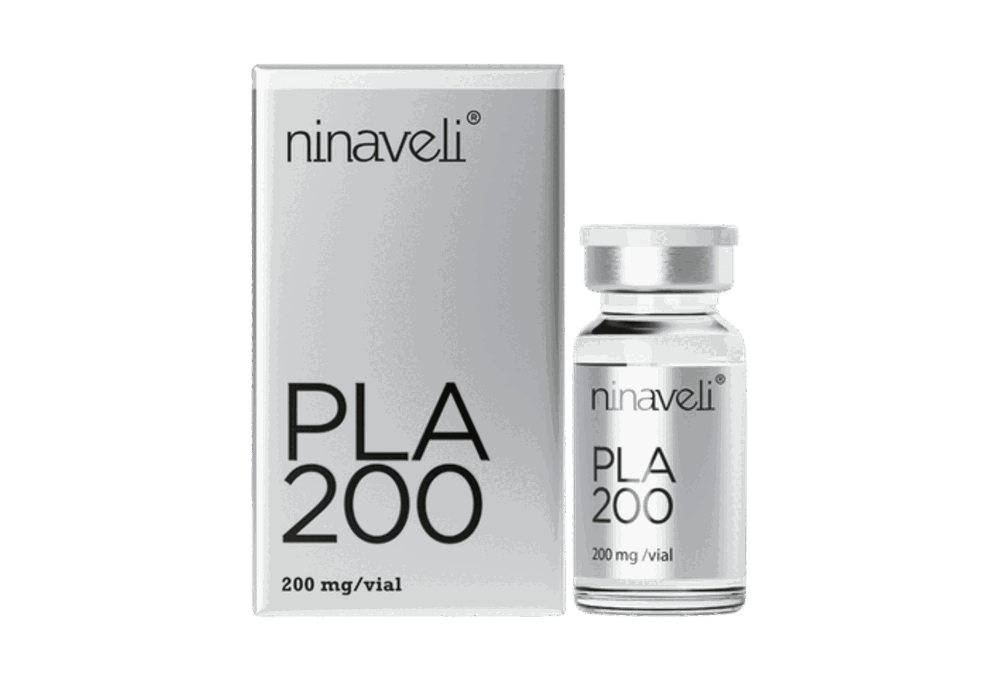
Ninaveli PLA 200

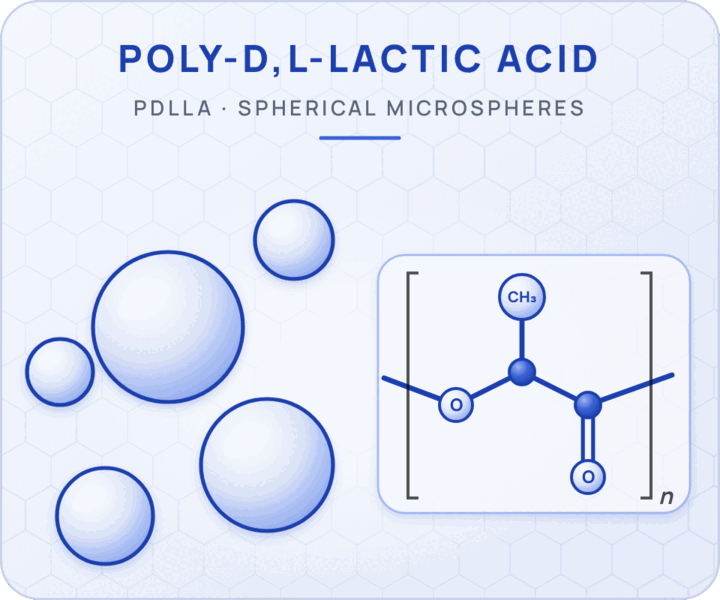
A next-generation PDLLA biostimulator: perfectly spherical poly-D,L-lactic acid microspheres (77%) with a carboxymethylcellulose gel (23%), freeze-dried in a 200 mg vial. It gives immediate volume, then stimulates the body’s own collagen for natural results that can last 18 to 24 months. KFDA approved and manufactured under ISO 13485. For export.

Product characteristics

  • 77% PDLLA (poly-D,L-lactic acid) microspheres
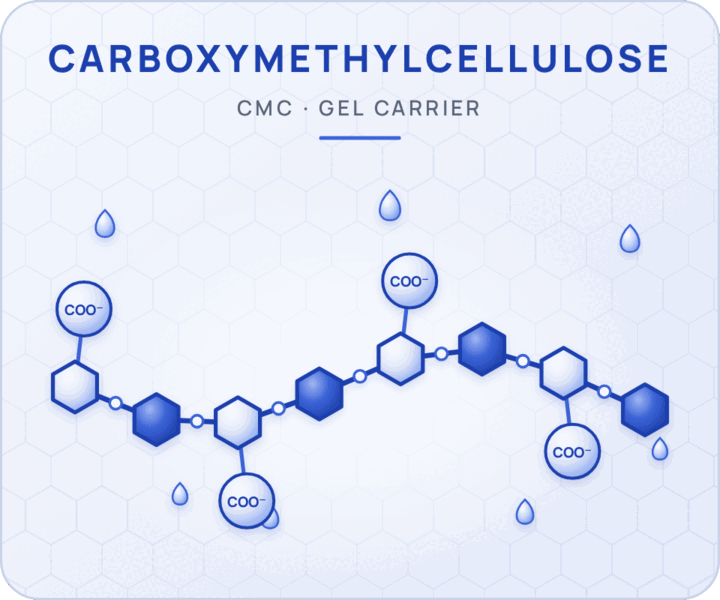
  • 23% CMC (carboxymethylcellulose) gel
  • Uniform spherical microspheres, 30–50 μm
  • Freeze-dried powder, 200 mg vial
  • Results lasting up to 18–24 months
  • Sterile, single use
  • KFDA approved

Questions about Ninaveli PLA 200? WhatsApp Ask our team

Ninaveli PLA 200: Spherical PDLLA for Natural, Lasting Volume

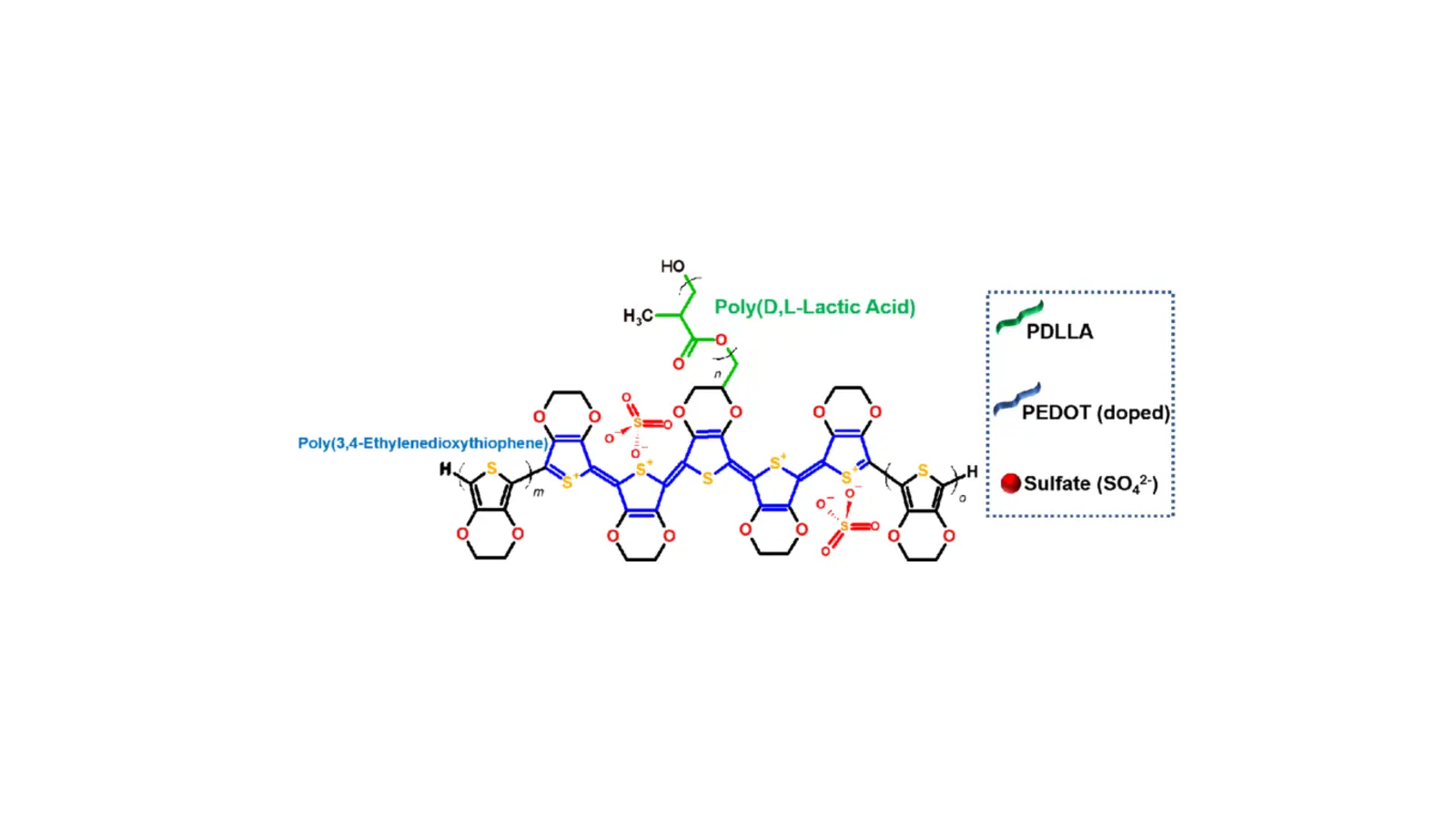
Ninaveli PLA 200 is a next-generation biostimulator that restores lost volume and improves the appearance of deep wrinkles, while encouraging the skin to rebuild its own collagen. It combines biodegradable poly-D,L-lactic acid (PDLLA) microspheres with a supportive carboxymethylcellulose (CMC) gel, freeze-dried for stability.

A dual-action mechanism

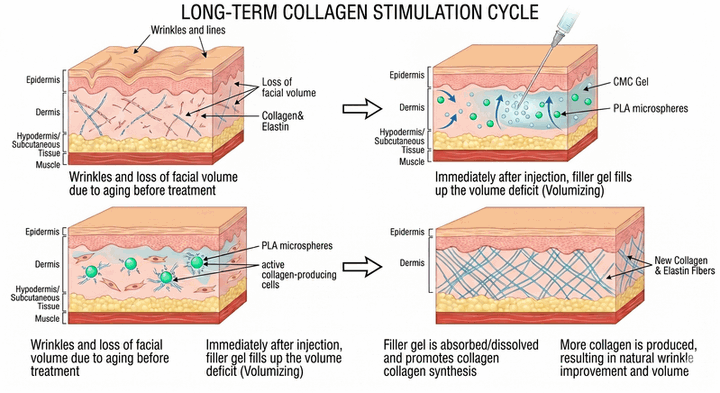
Injected into the dermis or subcutaneous layer, the CMC gel provides an immediate, visible volumising effect. Over the following weeks, the gel is naturally absorbed, while the PDLLA microspheres remain as a scaffold that stimulates the body’s own collagen production. The result is a gradual, natural-looking volume that can last 18 to 24 months.

Perfectly spherical particles

Using Continuous Membrane Technology (CMT), the PDLLA is formed into smooth, uniform microspheres of 30–50 μm. Uniform, spherical particles support a smooth, consistent injection through a 25G cannula and an even distribution in the tissue. As it biodegrades, PDLLA is broken down into lactic acid, which the body naturally metabolises.

Ninaveli PLA 200 is KFDA approved, manufactured under ISO 13485 and intended for export markets.

Active Ingredients

Poly-D,L-Lactic Acid (PDLLA) · 77%

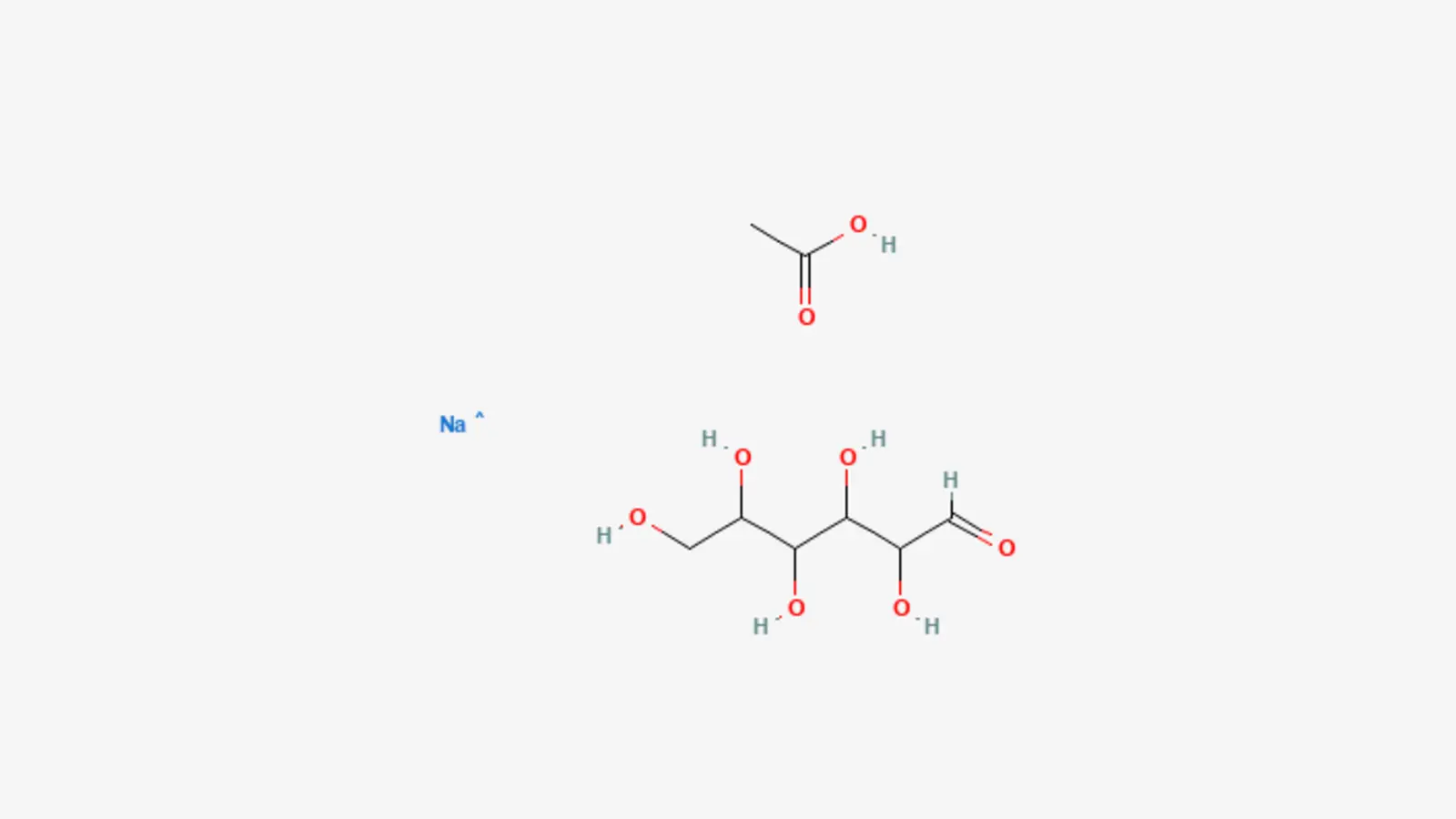
Biodegradable, biocompatible microspheres made from renewable plant sources such as corn and potato starch. After injection they form a scaffold that stimulates fibroblasts to produce new collagen, giving gradual, natural-looking volume for up to 18 to 24 months while slowly breaking down into lactic acid.

Carboxymethylcellulose (CMC) · 23%

A biocompatible gel carrier that suspends the microspheres and fills areas of volume loss immediately after injection, so patients see a result from day one. Over the following weeks it is naturally absorbed as the PDLLA-stimulated collagen takes over.

How It Works: The Collagen Stimulation Cycle

  • Before treatment: ageing skin has less collagen, leading to wrinkles and loss of volume.
  • Immediate effect: the injection fills the area with CMC gel and PDLLA microspheres for visible volume straight away.
  • Collagen stimulation: the body gradually absorbs the gel, while the microspheres stimulate fibroblasts to produce new collagen.
  • Lasting result: the new collagen reduces wrinkles and restores natural volume, as the microspheres slowly biodegrade into lactic acid.

Understanding PLA Biostimulators

Polylactic acid (PLA) biostimulators have evolved over several generations. The first used PLLA (poly-L-lactic acid), effective for collagen stimulation but made of irregular, crystalline particles. PDLLA (poly-D,L-lactic acid) followed as a more flexible alternative, and today it is used in several formulations, including combinations with hyaluronic acid or, as in Ninaveli PLA 200, with a CMC carrier gel for immediate support.

Why particle shape matters

Beyond chemistry, the physical shape and size of the particles influence how a PLA filler handles and behaves. A 2026 laboratory comparison of commercially available PLA fillers found clear differences in particle morphology, size, viscosity and reconstitution time, which the authors expect to influence injection force, injectability and early tissue behaviour.

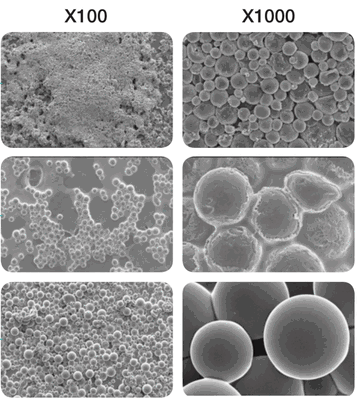
Ninaveli PLA 200 is engineered for smooth, perfectly spherical and uniform microspheres. Compared with the irregular or porous particles of other PLA fillers, this supports a smooth, consistent flow and an even distribution within the tissue.

Electron microscope images (×100 and ×1000) of three PLA fillers: Product A (top), Product B (middle) and Ninaveli PLA 200 (bottom).

Technical Information

PropertyNinaveli PLA 200
IngredientsPDLLA (poly-D,L-lactic acid) + CMC
CompositionPDLLA 77%, CMC 23%
Manufacturing methodFreeze-drying
Molecular weight190,000 – 250,000 Da
Microsphere size30 – 50 μm, spherical and uniform
Recommended cannula25G
Injection force3.5 N
Endotoxin level0.006 EU/mg
Presentation1 vial of 200 mg freeze-dried powder
PreparationReconstitute with water for injection (WFI) at room temperature and shake to dissolve
Dissolution time1 hour

Indications

For natural volume restoration, contouring and the correction of deep wrinkles, with long-lasting collagen stimulation.

Deep Wrinkle Improvement

Injected into the dermal or subcutaneous layers to improve the appearance of moderate to severe facial wrinkles in adults.

Facial Contouring

Defines the cheeks, contours the jawline and softens nasolabial folds.

Volume Restoration

Lifts and restores natural structural volume to areas depleted with age.

Body Contouring

Can also be used to shape and add volume to body areas such as the hips.

Benefits & Effects

Immediate volume that transitions into the body’s own collagen, with smooth, predictable handling.

BenefitsEffects
Smooth injection: uniform spherical particles give a smooth, consistent, low-force flow.Immediate volume: the CMC gel gives a visible lift straight after treatment.
Freeze-dried stability: the powder stays stable until reconstitution.Collagen stimulation: the microspheres stimulate the body’s own collagen production over time.
Biodegradable: PDLLA breaks down into lactic acid, which the body naturally metabolises.Wrinkle improvement: deep wrinkles look softened and youthful contours are restored.
Low endotoxin level: 0.006 EU/mg, from controlled, high-purity manufacturing.Long-lasting results: natural volume that can last 18 to 24 months.
Renewable sources: PDLLA made from plant starches such as corn and potato.Natural look: gradual, progressive results that look refreshed rather than “done”.

Clinical Studies

Below are some published studies previously conducted on the active ingredients used in this product.

Poly-D,L-Lactic Acid Stimulates Angiogenesis and Collagen Synthesis in Aged Animal Skin

Ingredient: Poly-D,L-Lactic Acid (PDLLA)

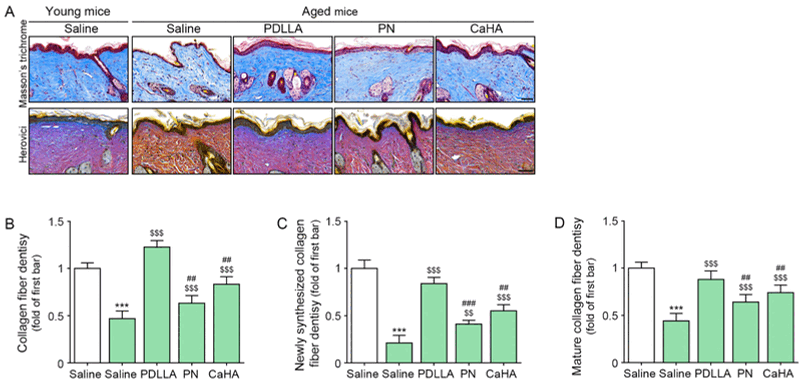
Summary: In this preclinical (animal) study, aged mice were injected with PDLLA and compared with young and untreated aged mice, alongside two other biostimulators (polynucleotides and CaHA). Aged skin had lower collagen density, thinner dermis and lower elasticity than young skin. After PDLLA injection, the density of total, newly synthesised and mature collagen fibres increased, as did dermal thickness and skin elasticity, and the study also showed increased formation of new blood vessels (angiogenesis).

Reference: Oh S, Seo SB, Kim G, Batsukh S, Son KH, Byun K. Poly-D,L-Lactic Acid Stimulates Angiogenesis and Collagen Synthesis in Aged Animal Skin. Int J Mol Sci. 2023;24(9):7986. doi: 10.3390/ijms24097986.

Collagen fibre density, new and mature collagen, dermal thickness and elasticity in young skin, aged skin and aged skin treated with PDLLA, PN or CaHA.

New-generation filler based on cross-linked carboxymethylcellulose: study of 350 patients with 3-year follow-up

Ingredient: Carboxymethylcellulose (CMC)

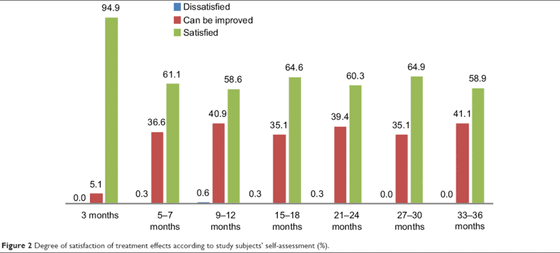
Summary: This 36-month, multicentre, open-label study followed 350 patients treated for fine lines and facial wrinkles with a filler based on cross-linked CMC, one of the largest and longest studies of its kind. At three months, 99.7% of patients had a clinically significant correction on both the Wrinkle Severity Rating Scale and the Global Aesthetic Improvement Scale. The improvement was maintained in about two thirds of patients at each later evaluation, typically lasting 9 to 12 months before re-treatment.

The authors conclude that cross-linked CMC is a safe and effective alternative to other resorbable fillers.

Reference: Leonardis M, Palange A. New-generation filler based on cross-linked carboxymethylcellulose: study of 350 patients with 3-year follow-up. Clin Interv Aging. 2015;10:147-155. doi: 10.2147/CIA.S74445.

Patient satisfaction with the treatment over the follow-up periods.

Comparative Physicochemical Characterization of Polylactic Acid-Based Dermal Fillers

Ingredient: Polylactic acid (PDLLA and PLLA) with carrier gels

Summary: This laboratory study compared four commercially available PLA-based fillers, three based on PDLLA and one on PLLA. The products differed in particle size and shape, size distribution, viscosity, osmotic pressure and reconstitution time; the PLLA product had the most distinct profile, with larger particles.

The authors conclude that these differences are likely to influence handling, injectability, tissue integration and early post-injection behaviour, and that particle morphology, size and viscosity may affect injection force and collagen stimulation patterns, insights that can help clinicians choose the right PLA filler for each treatment goal.

Reference: Su C-Y, Chang Y-C, Cheng P-J, Fang H-W. Comparative Physicochemical Characterization of Polylactic Acid-Based Dermal Fillers. Polymers. 2026;18(1):84. doi: 10.3390/polym18010084.

Packaging & Storage

Packaging Configuration

  • 1 × 200 mg vial of freeze-dried powder
  • Composition: PDLLA 77%, CMC 23%
  • 1 vial per box
  • Sterile, single use
  • Manufactured under ISO 13485
  • KFDA approved

Storage Guidelines

  • Temperature control: store the unopened vial in a cool, dry place between 1°C and 30°C. Protect from extreme heat and do not freeze.
  • Light protection: keep the vial in its original box until use, away from direct sunlight and strong lighting.
  • Sterility: do not remove the aluminium seal or rubber stopper until immediately before reconstitution and treatment.
  • Single use: once reconstituted, use the product immediately. Discard any remaining product; never store, refrigerate or reuse it for another treatment.

Certifications

  • MEDICAL DEVICES ✦ QUALITY MANAGEMENT ✦ CERTIFIED ✦ISO13485 ISO 13485 Worldwide
  • KOREA FOOD & DRUG ADMINISTRATION ✦ APPROVED ✦KFDAKOREA KFDA South Korea South Korea

Please note: The product information on this page and its translations were prepared with the help of AI. Although we review them carefully, errors or inaccuracies may occur. Always refer to the official product documentation and instructions for use. For professional use only: products must be used by qualified practitioners in accordance with local regulations. This information does not constitute medical advice.

Stock it at factory prices.

Download our catalogue, or order directly from the online shop.

Chat with us on WhatsApp